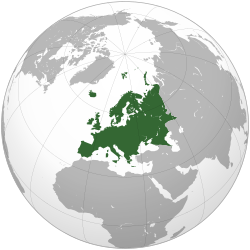
#1 Dubrovnik
Dubrovnik - Croatia
#1 Dubrovnik
Dubrovnik - Croatia
My own 'Great Wall of China'
Why I usually refer to the ancient city of Dubrovnik as my own 'Great Wall of China' in Europe? The answer is simple: nowhere did I experience such a feeling as when first catching the first glimp of the tremendous view over the city of Dubrovnik. As you walk down to the city gates this feeling in you grows and grows, to reach it's climax as you climb the magnificent city walls with their view over the Mediterranean... You imagine how the inhabitants of this city must have felt back then: as kings of the world, gods of the Mediterranean... You see, it's hard to describe. Me and even far greater photographers than me have tried to capture this feeling. Have tried to capture the city and it's history. And I'm sorry to conclude: None have succeeded. Go There!
A history of Dubrovnik
This walled City was described by Lord Byron as "The Pearl of the Adriatic". The town was founded in the 7th century on a site called Ragusium by the Romans. It was under the protection of the Byzantine Empire between 867 and 1205, of Venice until 1358, of Hungary until 1526, and of the Ottoman Empire until 1806, but remained largely self-governing as an independent republic. In the 16th century Dubrovnik had one of the greatest merchant fleets in the Mediterranean, and it remained the chief cultural centre for the South Slavs until the 19th century. Napoleon abolished the city-republic of Dubrovnik in 1808, and the Congress of Vienna ceded the town to Austria in 1815. By the terms of the Treaty of Rapallo (1920) following World War I, the town became part of the newly created Kingdom of the Serbs, Croats, and Slovenes (later Yugoslavia). During World War II Dubrovnik was occupied by Italian and German forces. In 1991, when Croatia declared its independence from Yugoslavia, Serbian forces laid siege to and bombarded the town, destroying many sites of historical importance. It has now been fully restored to its former Glory.
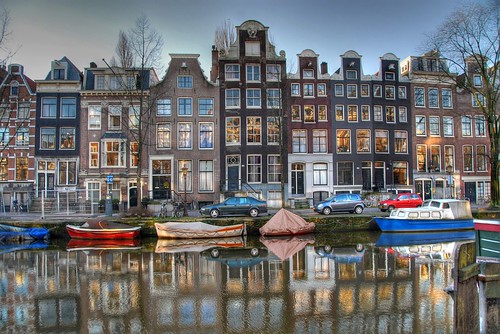 #2 Amsterdam
Amsterdam - The Netherlands
#2 Amsterdam
Amsterdam - The Netherlands
So much more than Wooden shoes, coffeeshops and the Red Light District!
Amsterdam, world-renowned for its romantic canals and the imposing architecture of the 17th century, a period often called as the "Golden Century". Amsterdam is the sparkling heart of Holland and will definitely get your blood pumping.
Amsterdam is a party town 365 days a year, with a harmonious co-existence of the historical and the modern, in a melting pot of nationalities that have only further contributed to the city's charms.
Amsterdammers are deservedly proud of their city and the gorgeous centre. Whatever it is you are looking for it can be found here, in a laid-back atmosphere that is exclusive to this monumental metropolis.
Amsterdam is a party town 365 days a year, with a harmonious co-existence of the historical and the modern, in a melting pot of nationalities that have only further contributed to the city's charms.
Amsterdammers are deservedly proud of their city and the gorgeous centre. Whatever it is you are looking for it can be found here, in a laid-back atmosphere that is exclusive to this monumental metropolis.
 #3 Berlin
Berlin - Germany
#3 Berlin
Berlin - Germany
'All the bullet holes of the world, you can find in Berlin'
The first and second world war, the cold war, the Berlin Wall... Berlin IS Europe's history of the 20th century. You see and feel it everywhere you go. But what you see and feel too is a reborn cultural capital of Europe. Go there and experience the history, the culture, the people, the parties, the laid back atmosphere... Berlin is more than even the 'Berliners' themselves would expect!
Berlin Cityscape(from Wikipedia.org) The city's appearance today is predominantly shaped by the key role it played in Germany's history in the 20th century. Each of the national governments based in Berlin-the 1871 German Empire, the Weimar Republic, Nazi Germany, East Germany, and now the reunified Germany-initiated ambitious construction programs, each with its own distinctive character. Berlin was devastated by bombing raids during World War II and many of the old buildings that escaped the bombs were eradicated in the 1950s and 1960s in both West and East. Much of this destruction was initiated by municipal architecture programs to build new residential or business quarters and main roads. Berlin's unique recent history has left the city with an eclectic array of architecture and sights.
In the eastern part, many Plattenbauten can be found, reminders of Eastern Bloc ambitions to create complete residential areas with fixed ratios of shops, kindergartens and schools. Another difference between former east and west is in the design of little red and green men on pedestrian crossing lights (Ampelmännchen in German); the eastern versions received an opt-out during the standardization of road traffic signs after reunification. The eastern Ampelmännchen design is now used in the western part of the city as well.
Picture: Branderburger Tor The Brandenburg Gate (German: Brandenburger Tor) is a former city gate and the symbol of Berlin, Germany. It is located between the Pariser Platz and the Platz des 18. März and is the only remaining gate of a series through which one formerly entered Berlin. One block to its north lies the Reichstag. It constitutes the monumental termination of Unter den Linden, the renowned boulevard of Lime trees which led directly to the royal residence. It was commissioned by Friedrich Wilhelm II as a sign of peace and built by Carl Gotthard Langhans from 1788 to 1791.
The first and second world war, the cold war, the Berlin Wall... Berlin IS Europe's history of the 20th century. You see and feel it everywhere you go. But what you see and feel too is a reborn cultural capital of Europe. Go there and experience the history, the culture, the people, the parties, the laid back atmosphere... Berlin is more than even the 'Berliners' themselves would expect!
Berlin Cityscape(from Wikipedia.org) The city's appearance today is predominantly shaped by the key role it played in Germany's history in the 20th century. Each of the national governments based in Berlin-the 1871 German Empire, the Weimar Republic, Nazi Germany, East Germany, and now the reunified Germany-initiated ambitious construction programs, each with its own distinctive character. Berlin was devastated by bombing raids during World War II and many of the old buildings that escaped the bombs were eradicated in the 1950s and 1960s in both West and East. Much of this destruction was initiated by municipal architecture programs to build new residential or business quarters and main roads. Berlin's unique recent history has left the city with an eclectic array of architecture and sights.
In the eastern part, many Plattenbauten can be found, reminders of Eastern Bloc ambitions to create complete residential areas with fixed ratios of shops, kindergartens and schools. Another difference between former east and west is in the design of little red and green men on pedestrian crossing lights (Ampelmännchen in German); the eastern versions received an opt-out during the standardization of road traffic signs after reunification. The eastern Ampelmännchen design is now used in the western part of the city as well.
Picture: Branderburger Tor The Brandenburg Gate (German: Brandenburger Tor) is a former city gate and the symbol of Berlin, Germany. It is located between the Pariser Platz and the Platz des 18. März and is the only remaining gate of a series through which one formerly entered Berlin. One block to its north lies the Reichstag. It constitutes the monumental termination of Unter den Linden, the renowned boulevard of Lime trees which led directly to the royal residence. It was commissioned by Friedrich Wilhelm II as a sign of peace and built by Carl Gotthard Langhans from 1788 to 1791.
 #4 Switzerland
Switzerland - See everything!
#4 Switzerland
Switzerland - See everything!
(It's a small country)
Where to start on Switzerland... The lakes in summer? The mountains in winter? The Montreux Jazz Festival, the best skiing slopes in the world, beautiful mountain hiking, shopping in Geneva, Partying in Zurich... So much to see and to do! And everything so fresh and clean! Go there! Winter: Forget Aspen, go high-society and ski in St. Moritz with the rich and shameless of Europe. Summer: Pack your backpack in summer and hike, hike, hike and hike through the most beautiful mountain landscapes. Or: rent a convertible and just drive, drive, drive. From Geneva to Lugano is a great trip: Lakes, cute towns, mountain roads, snowy peaks, hot boulevards...
 #5 The Plitvice Lakes
The Plitvice Lakes - Croatia
#5 The Plitvice Lakes
The Plitvice Lakes - Croatia
If God would have had Photoshop...
Or did he? Visit the Plitvice lakes and waterfalls and experience every color nature has to offer in every glance!
Plitvice National Park in Croatia is considered to be one of the most beautiful natural sights in Europe. Due to its natural beauty and significance, this system of 16 interlinked lakes and a large forest complex around it were set aside as a national park in 1949. In 1979 the park was inscribed on the UNESCO World Heritage List.
The sixteen lakes are separated into an upper and lower cluster formed by runoff from the mountains, descending from an altitude of 636 m to 503 m over a distance of some 8 km, aligned in a south-north direction.
The lakes are separated by natural dams of travertine, which is deposited by the action of moss, algae and bacteria. The encrusted plants and bacteria accumulate on top of each other, forming travertine barriers which grow at the rate of about 1 cm per year.
The lakes are renowned for their distinctive colours, ranging from azure to green, grey or blue. The colours change constantly depending on the quantity of minerals or organisms in the water and the angle of sunlight.
Or did he? Visit the Plitvice lakes and waterfalls and experience every color nature has to offer in every glance!
Plitvice National Park in Croatia is considered to be one of the most beautiful natural sights in Europe. Due to its natural beauty and significance, this system of 16 interlinked lakes and a large forest complex around it were set aside as a national park in 1949. In 1979 the park was inscribed on the UNESCO World Heritage List.
The sixteen lakes are separated into an upper and lower cluster formed by runoff from the mountains, descending from an altitude of 636 m to 503 m over a distance of some 8 km, aligned in a south-north direction.
The lakes are separated by natural dams of travertine, which is deposited by the action of moss, algae and bacteria. The encrusted plants and bacteria accumulate on top of each other, forming travertine barriers which grow at the rate of about 1 cm per year.
The lakes are renowned for their distinctive colours, ranging from azure to green, grey or blue. The colours change constantly depending on the quantity of minerals or organisms in the water and the angle of sunlight.
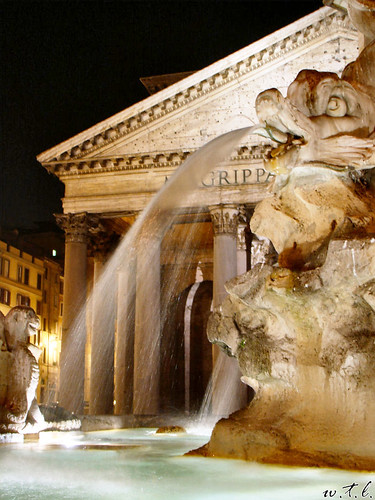 #6 Rome
Rome - Italy
#6 Rome
Rome - Italy
Capital of the World
Rome, capital of the world, the Eternal City, the city of the seven hills or simply the City: enough reasons to visit and get impressed by the many, many, many historical sights... Smell ancient Rome in the middle of this cosmopolitan-crazy Italian capital.
The old 'capital of the world' is thoroughly modern and cosmopolitan. As one of the few major European cities that escaped World War II relatively unscathed, central Rome remains essentially Renaissance and Baroque in character. The Historic Centre of Rome is listed by UNESCO as a World Heritage Site.
Situated on the River Tiber, between the Apennine Mountains and the Tyrrhenian Sea, the "Eternal City" was once the administrative center of the mighty Roman Empire, governing a vast region that stretched all the way from Britain to Mesopotamia. Today the metropolitan area is home to around 3.3 million people.
Don't forget to stop by the most iconic image of Rome, the Colosseum. This is where gladiator games and public spectacles were held for free. These games were brutal, with gladiators fighting each other until death. Gladiators were also at times forced to fight animals such as lions.
The old 'capital of the world' is thoroughly modern and cosmopolitan. As one of the few major European cities that escaped World War II relatively unscathed, central Rome remains essentially Renaissance and Baroque in character. The Historic Centre of Rome is listed by UNESCO as a World Heritage Site.
Situated on the River Tiber, between the Apennine Mountains and the Tyrrhenian Sea, the "Eternal City" was once the administrative center of the mighty Roman Empire, governing a vast region that stretched all the way from Britain to Mesopotamia. Today the metropolitan area is home to around 3.3 million people.
Don't forget to stop by the most iconic image of Rome, the Colosseum. This is where gladiator games and public spectacles were held for free. These games were brutal, with gladiators fighting each other until death. Gladiators were also at times forced to fight animals such as lions.
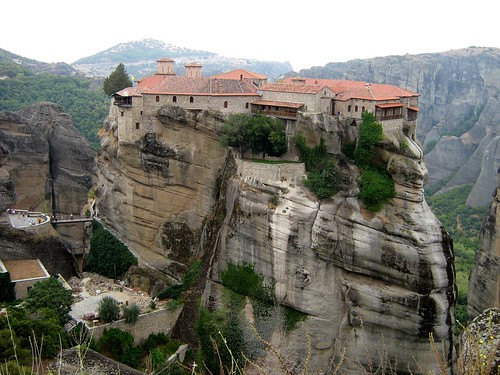 #7 Greece
Greece - Meteora
#7 Greece
Greece - Meteora
Imagine buildings on top of huge mountain rocks.
This is exactly what Meteora is Meteora means suspended in air. Hermit Byzantine monks in the ninth century first inhbited these mountains, living on fissures and caves along the rocks to spend time with God. In the 14th century, these hermit monks built 20 different monastaries to get away from Turkish occupation. The tall cliffs were the perfect escape for these monks. At first only ladders and ropes were the only way to reach these monestaries. During the 1920s steps were carved out making it more accessible. Today only six monestaries remain.
Best times to go May and June, it has the most comfortable weather. Acquaint yourself with Greek Orthodoxy to get the most enjoyment.
How to go: use buses from Thessaloniki, Ioannina, Trikala, and Athens. Lots of lodging options in Kalampaka at the base of Meteora.
This is exactly what Meteora is Meteora means suspended in air. Hermit Byzantine monks in the ninth century first inhbited these mountains, living on fissures and caves along the rocks to spend time with God. In the 14th century, these hermit monks built 20 different monastaries to get away from Turkish occupation. The tall cliffs were the perfect escape for these monks. At first only ladders and ropes were the only way to reach these monestaries. During the 1920s steps were carved out making it more accessible. Today only six monestaries remain.
Best times to go May and June, it has the most comfortable weather. Acquaint yourself with Greek Orthodoxy to get the most enjoyment.
How to go: use buses from Thessaloniki, Ioannina, Trikala, and Athens. Lots of lodging options in Kalampaka at the base of Meteora.